The convergence of artificial intelligence and IoT exploitation has fundamentally changed the threat landscape. Here’s what every IT leader needs to know—and do—right now.
In December 2024, a mid-sized healthcare network in the American Midwest discovered that attackers had been inside their infrastructure for seven months. The entry point wasn’t a phishing email or an unpatched server. It was a smart HVAC controller in a third-floor conference room—a device that IT security had never inventoried, never monitored, and didn’t know existed.
The attackers used AI-powered scanning tools to identify the device, fingerprint its firmware version, and automatically select an exploit. Within 72 hours of initial compromise, they had pivoted to the corporate network, accessed patient records, and begun staging data for exfiltration. The breach ultimately cost the organization $12.4 million in incident response, regulatory fines, and legal settlements.
This isn’t an outlier. It’s the new normal.
Welcome to 2026, where artificial intelligence and IoT exploitation have converged to create a threat landscape evolving faster than most security teams can adapt. The smart devices that promised to make your office more efficient—intelligent thermostats, connected conference systems, IP cameras, and access control panels—have become the primary attack surface for sophisticated threat actors.
The AI Weaponization Inflection Point: Why 2026 Is Different
For years, IoT security was a game of whack-a-mole. Attackers would discover a vulnerability, security researchers would disclose it, manufacturers would (sometimes) patch it, and the cycle would repeat. The limiting factor was always human—researchers could only analyze so many devices, attackers could only probe so many networks.
That constraint has evaporated.
Modern AI systems now perform automated vulnerability research against IoT devices at a pace that dwarfs human capabilities. They analyze firmware binaries, identify potential memory corruption bugs, and generate working exploits—all without human intervention. What once took a skilled researcher weeks now takes an AI system hours.
The numbers tell the story. In 2025, automated scanning activity increased by 16.7% globally, with IoT devices representing the primary target category, according to industry threat reports. Security firm Nozomi Networks documented a fundamental shift in attack methodology: instead of targeted exploitation, threat actors now deploy AI-driven tools that continuously probe entire network ranges, fingerprint every connected device, and automatically select the optimal attack vector for each target.
The FunkSec ransomware group exemplifies this evolution. First observed in late 2024, FunkSec was among the first threat actors to integrate generative AI directly into their malware development pipeline. Their tools don’t just exploit known vulnerabilities—they adapt in real-time, modifying attack patterns based on the specific defenses they encounter.
For enterprise IoT, this represents a fundamental change in the threat model. It’s no longer about whether attackers can find your vulnerable smart devices. They can, and they will. The question is how quickly your organization can detect and respond.
The Enterprise IoT Attack Surface: Beyond Security Cameras
When security teams think about enterprise IoT, they typically picture the obvious categories: security cameras, access control systems, and smart printers. But the actual attack surface extends far beyond these devices—and the risks are more severe than many organizations realize.
Smart HVAC and Building Management Systems
Building Automation Systems (BAS) represent one of the most underestimated threat vectors in enterprise environments. These systems control HVAC, lighting, fire suppression, and elevators—and they’re increasingly connected to corporate networks for remote management and energy optimization.
The problem? BAS protocols were designed for reliability, not security. BACnet, the dominant protocol for building automation, has minimal built-in authentication. Many BAS controllers run embedded Linux with firmware that hasn’t been updated in years. Because facilities teams typically manage these systems independently from IT, they often connect directly to the internet for remote vendor access—completely bypassing corporate security controls.
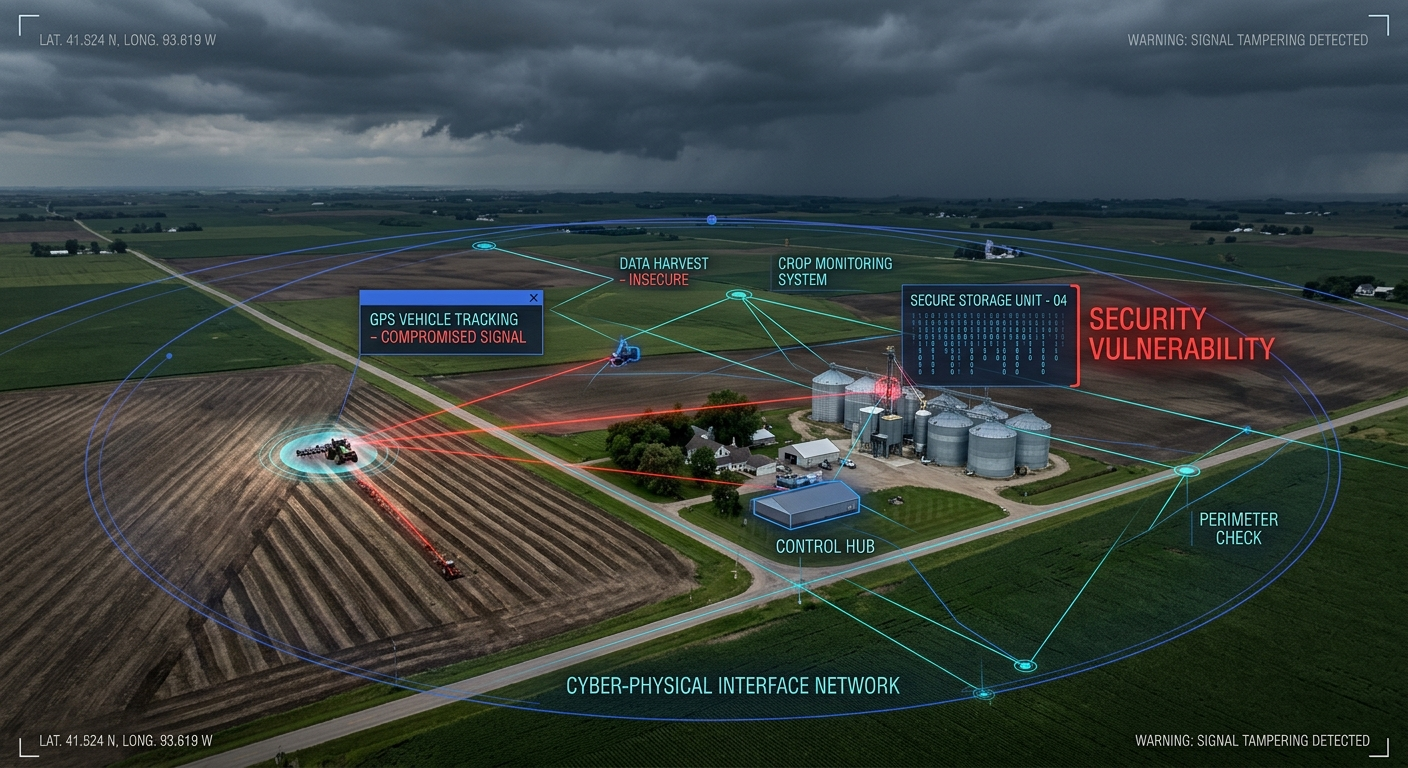
In May 2024, attackers demonstrated just how dangerous this can be. The RansomHub group gained access to a Spanish bio-energy plant’s SCADA systems through an internet-exposed building management interface. They didn’t just encrypt IT systems—they accessed Level 0 and Level 1 operational technology, the systems that directly control physical processes. They exfiltrated over 400 GB of data before the breach was detected.
AI amplifies this threat by enabling attackers to automatically discover BAS systems exposed to the internet, identify their specific firmware versions, and correlate that information with known vulnerabilities. Services like Shodan and Censys index hundreds of thousands of building automation systems with default credentials or known security flaws. AI tools now process this data at scale, automatically prioritizing targets based on attack potential and business value.
Conference Room Technology: A Surveillance Goldmine
The modern conference room is a surveillance dream—and an attacker’s paradise. Video conferencing systems with high-definition cameras and sensitive microphones, wireless presentation systems, smart displays, and room booking panels all represent potential entry points.
These devices present unique risks. First, they’re designed for ease of use, which typically means weak authentication. Second, they’re positioned to capture sensitive discussions—board meetings, merger negotiations, HR matters. Third, they often have direct network connectivity to enable features like calendar integration and remote management.
In 2024, security researchers documented multiple vulnerabilities in popular enterprise conference systems that would allow attackers to remotely enable cameras and microphones, intercept wireless presentation streams, and pivot to other network resources. The devices’ legitimate functionality—capturing and transmitting audio/video—becomes the attack capability.
AI-powered reconnaissance tools can now identify conference room systems across an organization’s network, determine when meetings are scheduled (often by querying exposed calendar APIs), and time their attacks to capture the most valuable intelligence. This isn’t theoretical—it’s active tradecraft documented by threat intelligence teams.
Physical Security Systems: When Cyber Meets Physical
The convergence of physical and logical security has created new attack surfaces spanning both domains. Modern access control systems use IP-connected readers, controllers, and management software. Video surveillance systems integrate with analytics platforms. Visitor management systems connect to identity providers.
Each integration point represents a potential vulnerability. Because physical security systems often predate modern cybersecurity practices, they frequently contain hardcoded credentials, unencrypted communications, and legacy protocols with known vulnerabilities.
The Lake Risavatnet incident in Norway illustrates the risk. Attackers bypassed authentication on a water infrastructure control system and maintained access for an extended period, able to manipulate physical controls at will. Weak passwords and poor monitoring enabled the attack—but AI-powered tools would have found the vulnerability in minutes rather than the weeks of manual reconnaissance human attackers required.
For enterprises, the implications are severe. Attackers who compromise access control systems can create backdoor credentials, disable logging, and facilitate physical intrusion. They can correlate badge data with employee directories to identify high-value targets. They can manipulate HVAC and lighting systems to create diversions during physical attacks.
Shadow IoT: The Hidden Threat Inside Your Network
Perhaps the most dangerous aspect of enterprise IoT security is what you don’t know you have. Shadow IoT—devices connected to corporate networks without IT knowledge or approval—has become endemic in modern organizations.
Security firm Claroty’s Team82 research unit found that 40% of organizations have operational technology assets insecurely connected to the internet. More troubling, 12% have OT assets actively communicating with known malicious domains. In many cases, affected organizations had no visibility into these connections.
How does this happen? The scenarios are frustratingly common:
Facilities teams install smart thermostats, lighting controllers, or air quality sensors to improve building efficiency—connecting them directly to the corporate network or to cellular bridges that bypass security controls entirely.
Executive assistants purchase consumer-grade smart speakers, digital picture frames, or streaming devices to make conference rooms and executive offices more comfortable—none of which are designed for enterprise security.
Employees bring personal devices from home—smart coffee makers, desk fans with Wi-Fi connectivity, fitness devices that sync over network connections—creating attack vectors that security teams never anticipated.
Vendors install equipment with embedded connectivity for remote maintenance—HVAC systems, UPS batteries, elevator controls, vending machines—often with direct internet access and default credentials.
The result is a hidden network of devices that IT security cannot see, cannot patch, and cannot protect. According to the 2024 Netgear threat report, researchers documented an average of 29 attack attempts per household per day targeting IoT devices. Enterprise environments, with their richer targets and larger device populations, face proportionally greater exposure.
AI-powered attack tools are particularly effective against shadow IoT because they can identify devices that human analysts might overlook. Machine learning models trained on network traffic can detect the subtle signatures of IoT devices even when they’re not properly inventoried—and attackers have access to the same techniques that defenders use for asset discovery.
How AI-Powered Attacks Target Enterprise IoT
Understanding how AI changes IoT exploitation requires examining the attack lifecycle. Modern threat actors have integrated artificial intelligence into every phase of their operations.
Intelligent Asset Discovery and Fingerprinting
Traditional network scanning tools like Nmap generate predictable traffic patterns that security teams can detect and block. AI-enhanced scanning tools take a different approach—they mimic legitimate traffic patterns, vary their timing and techniques based on observed responses, and intelligently prioritize targets based on likelihood of vulnerability.
These tools can passively analyze network traffic to identify device types and firmware versions without sending any probes at all. They correlate information from multiple sources—DNS records, SSL certificates, service banners, timing characteristics—to build detailed profiles of target environments.
For IoT devices specifically, AI tools can identify manufacturers and model numbers from network behavior alone. A smart thermostat from Vendor A communicates differently than one from Vendor B, and machine learning models can distinguish between them with high accuracy. This capability enables attackers to automatically correlate discovered devices with known vulnerability databases.
Automated Vulnerability Research and Exploit Generation
The most significant AI advancement in IoT exploitation is automated vulnerability research. Large language models can now analyze firmware binaries, identify potential security flaws, and in some cases generate working exploits—all without human direction.
This capability was theoretical two years ago. In 2026, it’s operational. Security researchers have documented threat actors using AI tools to discover novel vulnerabilities in IoT devices faster than vendors can patch them. The traditional 90-day responsible disclosure timeline assumes human-speed vulnerability research. AI doesn’t operate on that timeline.
The Gayfemboy botnet, a Mirai variant first detected in February 2024, demonstrates this evolution. The botnet actively exploits over 20 different vulnerabilities, including zero-days in industrial routers and smart home devices. Its command infrastructure adapts to security researcher attempts to analyze it, and it modifies its exploitation techniques based on target characteristics.
At its peak, Gayfemboy maintained 15,000 active nodes and launched attacks against hundreds of targets daily. The botnet’s operators didn’t manually discover those 20+ vulnerabilities—they leveraged automated tools that continuously probe new device types and generate exploit code.
Adaptive Exploitation That Evades Detection
Traditional exploit tools are static—they attempt a known attack sequence and either succeed or fail. AI-enhanced exploitation tools are dynamic. They observe how targets respond to initial probes, adjust their techniques based on detected defenses, and chain together multiple vulnerabilities when single exploits fail.
This adaptive capability is particularly dangerous for IoT devices because most IoT security monitoring looks for known attack patterns. When an AI tool generates a novel attack sequence—perhaps combining a legitimate authentication flow with an unusual timing pattern and an edge case in input validation—traditional detection methods fail.
Security teams have reported incidents where AI-generated exploits evaded detection precisely because they didn’t match any known signatures. The attack tools were essentially writing new exploits on the fly, customized for each specific target.
Real-World Impact: Enterprise IoT Breach Case Studies
The threat is not theoretical. Multiple documented incidents in 2024 and 2025 demonstrate how enterprise IoT vulnerabilities translate into significant security breaches.
Manufacturing: The Clorox Ransomware Attack
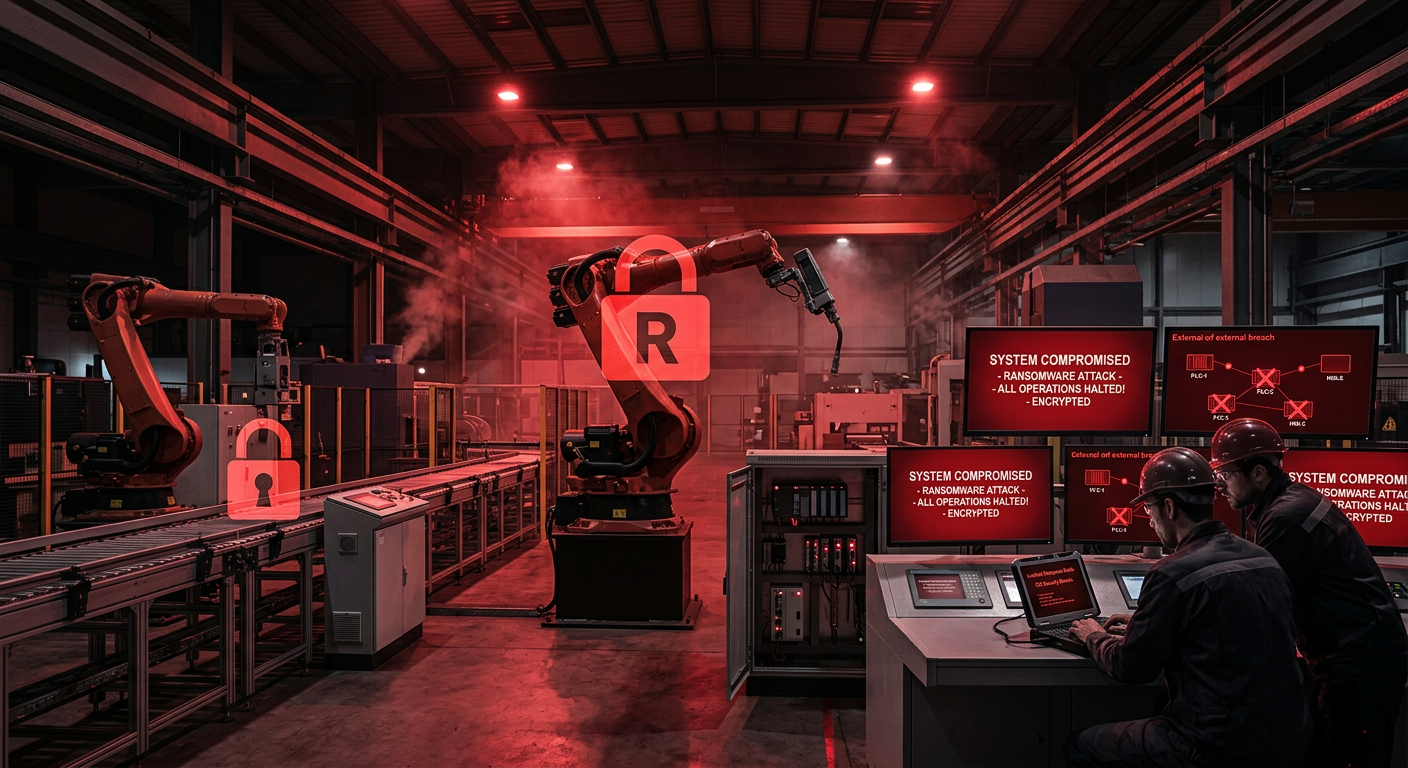
In August 2023, Clorox discovered that ransomware had penetrated their manufacturing infrastructure. The attack disrupted production ahead of flu season—when demand for cleaning products peaks—and caused product shortages lasting months.
The financial impact: $49 million in direct costs, plus significant brand damage and lost sales.
Internal audits conducted in 2020 had warned of cybersecurity flaws at Clorox plants, but the organization hadn’t prioritized remediation. The attackers exploited this gap, gaining access through operational technology with inadequate security controls.
What made the Clorox incident particularly damaging was the operational technology impact. The attackers didn’t just encrypt data—they disrupted physical manufacturing processes. The company was forced to manually process orders, significantly slowing operations during their highest-demand period.
Healthcare: Medical IoT Under Siege
In February 2024, a coordinated ransomware campaign targeted IoT-connected medical devices in several U.S. hospitals. Patient monitoring systems, infusion pumps, and MRI machines were affected. Hospitals were forced to revert to manual procedures, delaying treatments and potentially endangering patients.
Root cause analysis identified three contributing factors: outdated security patches on medical devices, insufficient network segmentation that allowed attackers to move laterally from IT to clinical systems, and default credentials on network-connected medical equipment.
Healthcare IoT breaches now carry an average cost exceeding $9.7 million per incident according to IBM’s Cost of a Data Breach Report—the highest of any industry sector. The combination of sensitive patient data, life-safety implications, and regulatory penalties creates extraordinary financial exposure.
Logistics: When Cyberattacks Become Existential
In 2024, Australian logistics company Barnett’s Couriers suffered a cyberattack that completely crippled operations. The company never recovered—it was forced to close permanently, leaving its workforce without jobs.
While details of the attack vector remain limited, the outcome illustrates a critical reality: for organizations where IoT and operational technology are central to business function, a successful attack can be existential. This isn’t just about data protection—it’s about business survival.
State-Sponsored Threats: Volt Typhoon’s Critical Infrastructure Campaign
Perhaps most concerning is the documented activity of state-sponsored threat actors targeting enterprise IoT and operational technology. The Volt Typhoon campaign, attributed to Chinese state-sponsored actors, has focused on pre-positioning within U.S. critical infrastructure networks.
In September 2025, the FBI disclosed that Volt Typhoon hackers had maintained access to a Massachusetts utility’s systems for 10 months. FBI Director Christopher Wray characterized the threat bluntly: “This is not theoretical… what we’ve found to date is likely the tip of the iceberg.”
Volt Typhoon’s tactics specifically target IoT and operational technology. The attackers focus on gaining access to machines, sensors, and control systems—not just data. Their goal appears to be establishing the capability for disruptive or destructive action during a potential geopolitical crisis.
For enterprise security teams, the implication is clear: IoT and OT security is now a national security issue. Your organization’s smart building systems may be a vector not just for criminal ransomware operators, but for state-sponsored actors with strategic objectives.
Defense Strategies: Protecting Enterprise IoT From AI-Powered Attacks
Defending against AI-enhanced IoT attacks requires a fundamentally different approach than traditional endpoint security. IoT devices can’t run antivirus software. They often can’t be patched promptly. Many can’t be updated at all.
Success requires defense in depth—layered controls that assume any individual defense may fail.
Achieve Complete Asset Visibility
You cannot protect what you cannot see. The foundation of enterprise IoT security is comprehensive asset discovery and inventory.
This means deploying passive network monitoring that can identify IoT devices based on traffic analysis, not just agent installation. It means conducting regular audits of building systems, conference rooms, and physical security equipment. It means establishing procurement controls that require IT security review before any network-connected device enters the environment.
Modern asset discovery platforms use machine learning to identify device types and detect behavioral anomalies. They can often identify shadow IoT that traditional inventory tools miss. Investment in these capabilities is no longer optional—it’s foundational.
Implement Aggressive Network Segmentation
Every security framework for IoT emphasizes network segmentation, and for good reason. When properly implemented, segmentation contains breaches, prevents lateral movement, and limits the blast radius of any successful attack.
For enterprise IoT, the goal is microsegmentation—creating granular security zones around specific device categories or even individual high-risk devices. Smart building systems should be isolated from corporate IT. Conference room equipment should be on separate network segments from finance systems. Access control infrastructure requires particular isolation given its dual cyber-physical impact.
The IEC 62443 standard provides a mature framework for OT and IoT segmentation. It defines zones (groups of assets with similar security requirements) and conduits (controlled communication pathways between zones). Implementing this architecture requires investment, but organizations that have done so report significantly reduced incident impact.
Apply Zero Trust Principles to IoT
Traditional perimeter security assumed that devices inside the network were trustworthy. That assumption has always been flawed for IoT—devices with minimal security features and frequent vulnerabilities should never be implicitly trusted.
Zero trust architecture applies the principle of “never trust, always verify” to every device and every connection. For IoT specifically, this means:
Identity-based access control: Every device must authenticate before accessing network resources, and access permissions should be limited to the minimum necessary for device function.
Continuous behavioral monitoring: Device behavior should be continuously analyzed for anomalies. A smart thermostat that suddenly starts scanning the network or communicating with external IP addresses should trigger immediate investigation.
Least privilege networking: IoT devices should only communicate with the specific systems they need to function. A security camera needs to reach its recording server—it doesn’t need access to your HR database.
Encrypted communications: All IoT traffic should be encrypted, both in transit and at rest. Devices that cannot support modern encryption standards should be isolated or replaced.
Strengthen Vendor and Supply Chain Security
The BadBox 2.0 botnet demonstrated that IoT threats can arrive pre-installed. Malware embedded in devices at the factory level—before they’re even purchased—creates a risk that no amount of post-deployment security can address.
Enterprise procurement must include security requirements in vendor contracts:
- Unique, device-specific credentials (no default passwords)
- Secure boot and firmware integrity verification
- Regular security updates with defined support periods
- Vulnerability disclosure and response processes
- Third-party security certifications (IEC 62443-4-1, SOC 2, etc.)
Organizations should also audit existing IoT deployments for devices from unknown or untrusted manufacturers. Budget devices with suspiciously low prices often achieve those prices by skipping security—and may arrive compromised.
Develop IoT-Specific Incident Response Procedures
Traditional incident response playbooks assume you can isolate affected systems, acquire forensic images, and analyze logs. IoT devices often don’t support these capabilities—they may have no local storage, no forensic interfaces, and no meaningful logging.
Security teams need IoT-specific incident response procedures that account for these limitations:
- Pre-configured network isolation capabilities for IoT segments
- Vendor contacts and escalation procedures for major IoT platforms
- Decision criteria for device replacement versus attempted remediation
- Communication templates that address both cyber and physical security stakeholders
Deploy AI-Powered Monitoring and Threat Intelligence
AI-powered threats require AI-powered defenses. Security teams should deploy monitoring solutions that use machine learning to establish baseline device behavior and detect anomalies. They should integrate threat intelligence feeds that include IoT-specific indicators of compromise.
The monitoring challenge for IoT is scale. A large enterprise may have thousands of IoT devices across hundreds of locations. Human analysts cannot review every device’s network traffic manually. AI-assisted monitoring tools can—and they’re increasingly effective at detecting the subtle indicators of compromise that manual review would miss.
The Regulatory Landscape: Compliance Requirements for IoT Security
Enterprise IoT security is increasingly a compliance requirement, not just a security best practice.
The EU’s NIS2 Directive, now in effect, requires organizations in critical sectors to implement comprehensive cybersecurity risk management—including for IoT and operational technology. Penalties for non-compliance can reach €10 million or 2% of global annual turnover.
The UK’s Product Security and Telecommunications Infrastructure (PSTI) Act, effective since April 2024, bans default passwords and requires manufacturers to specify security update support periods. Organizations deploying non-compliant devices may face regulatory exposure.
In the United States, the NIST Cybersecurity Framework 2.0 emphasizes IoT security in its Govern function, and sector-specific regulations (HIPAA for healthcare, NERC CIP for energy) increasingly address connected devices.
The message from regulators is consistent: IoT security is board-level responsibility. Organizations that suffer breaches due to inadequate IoT security will face not just operational damage, but regulatory penalties and potential executive liability.
Looking Ahead: Preparing for the Next Wave of AI-IoT Threats
The threat actors are not standing still. AI capabilities are advancing rapidly, and each advance creates new attack possibilities. Large language models are becoming more capable at code analysis and exploit generation. Autonomous agents can now chain together multiple attack steps without human direction. The barriers to sophisticated IoT exploitation continue to fall.
But defenders have access to the same technologies. AI-powered asset discovery, anomaly detection, and threat hunting are becoming more effective. Regulatory pressure is forcing manufacturers to improve device security. Industry frameworks like IEC 62443 and zero trust architecture provide proven approaches for reducing risk.
The organizations that will weather this storm are those that act decisively now—achieving visibility into their IoT deployments, implementing segmentation and zero trust controls, and building security teams with IoT-specific expertise.
The alternative—continuing to treat IoT as an IT afterthought—is increasingly untenable. The smart devices in your office have indeed become dramatically more dangerous. But with the right approach, they don’t have to become your organization’s next breach notification.
The threat landscape for enterprise IoT is evolving faster than ever. For IT managers and CISOs, the imperative is clear: achieve visibility, implement defense in depth, and prepare for AI-enhanced threats that target your smart devices by design. The cost of inaction grows daily.