Securing IoT in Smart Cities: Safeguarding Public Data in a Connected World


Introduction
Smart cities are no longer a concept of the future. With the rapid adoption of the Internet of Things (IoT) technologies, cities around the globe are becoming more intelligent, efficient, and user-friendly. However, this technological leap comes with its own set of challenges, particularly in the realm of security. This article aims to provide an overview of how IoT is revolutionizing smart cities and the critical security measures needed to protect public data.
The Role of IoT in Smart Cities
IoT technologies are at the heart of smart city initiatives. From traffic management systems and waste disposal to public safety and energy conservation, IoT devices are making cities smarter and more efficient. Here are some common applications:
- Traffic Management: IoT sensors can monitor traffic flow and adjust traffic signals in real-time to reduce congestion.
- Waste Management: Smart bins equipped with sensors notify the collection trucks when they are full, optimizing routes and schedules.
- Public Safety: Surveillance cameras and emergency response systems are interconnected to provide real-time updates to law enforcement agencies.
- Energy Conservation: Smart grids adjust the distribution of electricity based on real-time demand, reducing waste.
Security Risks in Smart City IoT
As cities become more connected, they also become more vulnerable to cyber-attacks. Here are some of the security risks associated with IoT in smart cities:
- Data Breach: Unauthorized access to sensitive public data.
- Device Manipulation: Hackers can take control of IoT devices, causing them to malfunction.
- Denial of Service (DoS) Attacks: Overloading the network with traffic, making it unavailable for users.
- Physical Tampering: Physical damage to the IoT devices can also compromise data.
Essential Security Measures
Data Encryption
Encrypting the data at rest and in transit is crucial. Advanced Encryption Standard (AES) is commonly used for this purpose.
Regular Software Updates
Manufacturers should provide regular firmware updates to patch any security vulnerabilities. Over-the-air (OTA) updates can make this process seamless.
Multi-Factor Authentication (MFA)
Implementing MFA can add an extra layer of security. It requires two or more verification methods - something the user knows (password), something the user has (security token), or something the user is (biometric verification).
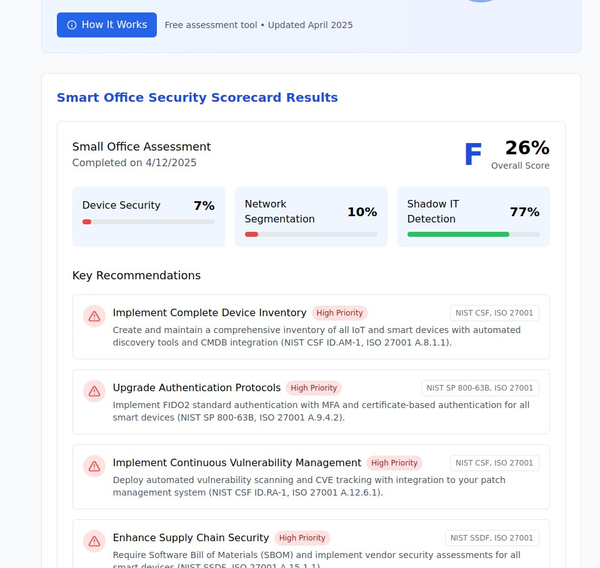
Network Segmentation
Dividing the network into segments ensures that even if one device is compromised, the attacker cannot easily move laterally across the network.
Public Awareness
Educating the public about the potential risks and how to report suspicious activities can go a long way in enhancing security.
Conclusion
The integration of IoT in smart cities offers unprecedented opportunities for enhancing urban life. However, it also presents new challenges in securing public data and infrastructure. By implementing robust security measures like data encryption, regular software updates, multi-factor authentication, network segmentation, and public awareness, cities can take significant steps towards mitigating these risks.
By staying vigilant and adopting a multi-layered security approach, smart cities can indeed be both "smart" and "secure."